

|
|
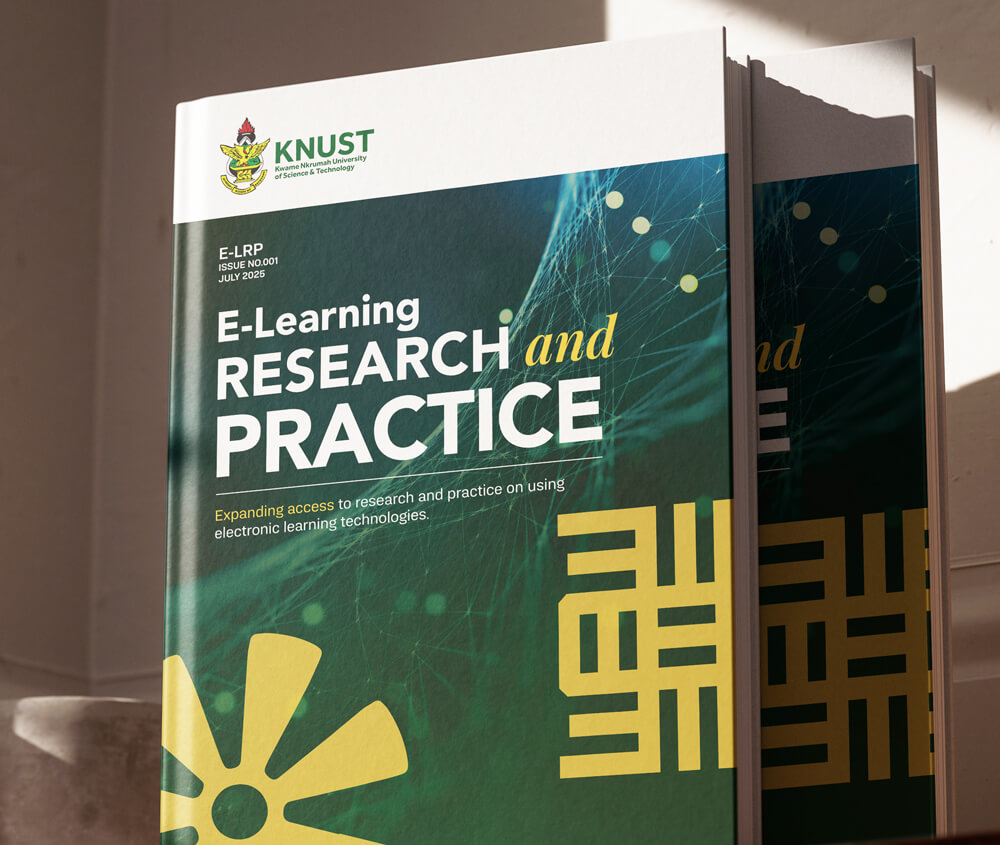
About the JournalThe E-Learning Research and Practice (E-LRP) journal is a new Open-Access Journal. This journal aims to increase knowledge and promote understanding of e-learning by publishing high-quality research that extends the theory and practice of using electronic and digital technology platforms to drive improved education and development in Africa and globally. The E-LRP has come to fill a unique niche by supporting sustainable learning and education solutions through providing improved access to cutting-edge research that enables enhanced inclusive digital education and training of education professionals. |
Genesis of the Journal
The E-Learning Research and Practice (E-LRP) Journal was conceived and established from a strategic vision initiated within the KNUST E-Learning Centre during the tenure of Prof. Eric Appau Asante as Director. It emerged in response to the growing need for a dedicated scholarly platform to document, share, and advance knowledge in digital education.
As the Centre’s work in technology-enhanced learning gained visibility across the university and beyond, it became increasingly clear that a peer-reviewed, open-access journal was essential to consolidate research efforts, showcase innovation, and contribute meaningfully to global discourse on e-learning.
In pursuit of this vision, a proposal was submitted to University Management outlining the rationale, scope, and long-term impact of such a journal. The proposal received strong institutional endorsement, leading to the formation of a dedicated committee tasked with bringing the idea to life. The committee comprised academics and professionals with diverse expertise in e-learning, publishing, research, and educational policy.
The initiative was driven not merely by institutional ambition, but by a shared commitment to advancing inclusive, evidence-informed digital learning practices across varied educational contexts— both locally and globally. It was envisioned that the journal would serve as a bridge between theory and practice, providing space for scholarly contributions that explore the pedagogical, technological, and policy dimensions of e-learning. From the outset, the goal was to create a credible and accessible platform open to contributions from across disciplines and regions, while intentionally amplifying voices and perspectives from contexts often underrepresented in mainstream academic publishing. By anchoring the journal within KNUST, the university reaffirmed its role as a leader in shaping the future of education through research and innovation.
Today, E-Learning Research and Practice (E-LRP) stands as the embodiment of this vision. It welcomes a wide range of contributions—including empirical studies, theoretical explorations, and practice-led case reports—covering blended learning, instructional design, emerging technologies, virtual assessment, policy development, and more. With a strong editorial foundation and a global outlook, the journal is poised to make a significant and lasting contribution to the evolving body of knowledge in digital education.
The history of E-LRP reflects what is possible when visionary leadership, institutional foresight, and collaborative academic engagement converge with purpose. It is a testament to KNUST’s continued commitment to advancing relevant, inclusive, and forward-thinking educational solutions for a rapidly changing world.
|
|
E-Learning Research and Practice (E-LRP) is a peer-reviewed, open-access, inter- and multidisciplinary scientific journal dedicated to expanding access to research and practice on using electronic learning technologies, innovations and initiatives to improve education and learning outcomes. The E-LRP journal welcomes manuscripts (research papers, case reports, and theoretical insights) that address research and practice issues in the following areas: |

- Blended learning
- Sustainable Practical Solutions
- Technological Innovations and New Advances (E-Learning and Emerging Technologies) (AI, VR, AR, etc.)
- Case Reports: shorter practice-led articles describing the implementation of forms of e-learning likely to be of interest to the Journal’s readership
- Instructional Design and use of interactive learning environments
- Management and Organisational Development (logistics and organisational challenges in e-learning contexts; strategic leadership and management styles in e-learning contexts)
- Policy and Development (formulation and revisions of laws, regulations and guidelines for e-learning initiatives in educational contexts)
- Quality, Assessment, Evaluation and Accreditation in e-learning contexts (quality assurance, evaluation and standardisation issues, accreditation challenges of e-courses, ethics)
- Online/ Virtual examinations
Editorial Board
Editor-in-Chief (EiC): Prof. Emmanuel Adinyira (PhD), Deputy Editor-in-Chief (DEiC): Prof. Eric Appau Asante (PhD)
Associate Editors: Prof. Kofi Agyekum (PhD), Juliana Abagsonema Abane (PhD), Paul Kwadwo Addo (EdD), Benjamin Apraku Gyampoh (PhD), Dickson Adom (PhD), Richard Bruce Lamptey (PhD) and Abena Boakye (PhD)

Journal Committee Members